
A standard office chair or desk chair is built around an average adult. In Europe the usual test standard, BS EN 1335, is based on a user of up to 110kg (about 17 stone) sitting for eight hours a day. Go beyond that, or sit a lot taller than average, and three things start to go wrong: the seat is too narrow and too shallow, the backrest stops below your shoulder blades, and the base and cylinder are working well beyond what they were tested for.
A big and tall model fixes each of those:
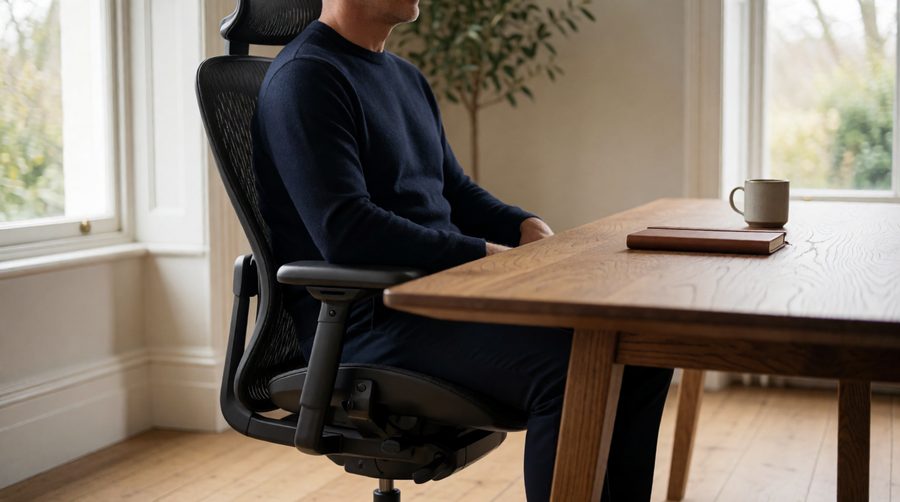
These are chairs from our range with figures taken from each maker's listing. Capacity is the maximum user weight; stone is rounded.
| Chair | Max weight | Seat | Back | Cover | Extras |
|---|---|---|---|---|---|
| Efomao 3084UK | 200kg (31.5st) | 60cm deep, 48cm high | 58cm wide, 80cm tall | Fabric | Footrest, 3 recline positions |
| Efomao 3008UK Large | 200kg (31.5st) | 60cm deep, 48cm high | 58cm wide, 80cm tall | PU leather | Recline up to 135 degrees |
| Efomao 3008UK White | 200kg (31.5st) | 60cm deep, 48cm high | 58cm wide, 80cm tall | White PU leather | Recline up to 135 degrees |
| EXCEBET 3043 | 180kg (28st) | 57.5cm wide (XXL) | Mesh, 126cm overall | Mesh | Pocket springs, Class 4 gas lift |
| Office Hippo Heavy Duty | 152kg (24st) | 52cm wide, 51cm deep (+6cm slide), 47-56.5cm high | 48cm wide, 56-61cm tall | Fabric | 24 hour use rated |
| Hbada E3 Ultra | Check listing | Oversized frame | Mesh, 120cm overall | Mesh, polyester | 3-zone lumbar, 4D headrest, 5-year core warranty |
| Newtral NT002 | 136kg (21st) | Depth adjustable, 45cm high | Mesh, 137cm overall | Mesh | Footrest, auto-follow lumbar |
What the figures show: the Efomao frames have the deepest seats and tallest backs, so they suit tall people as much as heavier users. The EXCEBET has the widest seat. The Office Hippo is the one to pick for long shifts, as it carries 24 hour use certification, and its sliding seat and 56.5cm top height help long legs. The Newtral is a well-equipped ergonomic office chair with a swivel aluminium base, but at 136kg it's for tall rather than heavy users.
Pick a chair rated at least 10-15kg above your own weight. The figure on a listing is a maximum, and an office chair that runs near its limit every day wears out faster. In the UK a useful benchmark is BS 5459-2, the British standard for office seating used by people weighing up to 150kg, or for up to 24 hours a day. SATRA's guide to office chair testing explains how it differs from the 110kg, eight-hour BS EN 1335 test. Amazon listings often quote BIFMA or SGS testing instead; these are useful, but check the weight they were tested to.
You want 2-3cm of space either side of your hips with the arms in place. Most heavy duty models are 55-60cm across, against about 48-50cm on an average office chair. Depth matters just as much for tall people: if the front edge of the seat stops well short of your knees, your thighs aren't supported and pressure builds under them. A sliding seat, like the 6cm slide on the Office Hippo, lets one chair fit several people.
Sit with your feet flat and your knees level with or slightly below your hips. Over 6ft 2in, many chairs top out too low, so look for a top height of around 55cm or more, or use a taller cylinder. The backrest should reach at least your shoulder blades; a high back with an adjustable neck rest supports you when you lean back. The HSE's good posture guide shows the sitting position to aim for.
On a tall back, fixed lumbar support often sits too low. Adjustable lumbar support that moves up and down (and ideally in and out) lets you place it in the curve of your lower back. If you already get back pain, see our office chairs with adjustable lumbar support.
Fixed arms are the most common complaint from bigger users, because they set the usable seat width. Height-adjustable or flip-up arms are better; 4D arms that also slide and swivel are best. Check the armrest posts are metal rather than thin plastic, as they take your weight every time you stand up.
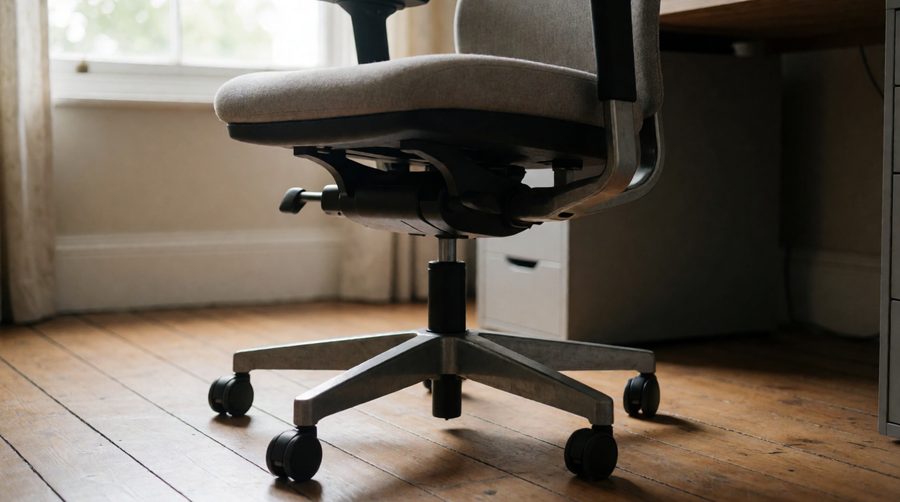
Look for a metal base (steel or aluminium rather than nylon), large castors and a Class 4 cylinder, the strongest common grade of swivel lift. If your floor is carpet, a chair mat stops the wheels digging in; on wooden floors soft rubber castors protect the boards.
Bigger users tend to run warmer, so the cover matters more than it seems.


Gaming brands make XL sizes too: the Secretlab Titan Evo XL, for example, is sized for much taller users with a high weight limit. Racing-style seats have raised side bolsters, though, which can feel narrow across the hips even when the listed width looks generous. If you mostly work at a desk, an office chair with a flatter seat is usually more comfortable. For a cheaper computer chair with neck support, see our computer chairs with headrests.
Specialist bariatric office chair makers such as BodyBilt sell custom-built heavy duty seating from around £1,000 to well over £2,000, with long warranties. Big name chairs like the Herman Miller Aeron in size C cost a similar amount. Big and tall office chairs on Amazon start far lower, and the chairs in our grid give 150-200kg capacities and wide seats for a fraction of that. If price is the main limit, our affordable ergonomic office chairs and chairs under £500 are worth a look; just check the weight rating first. Whatever you spend, read the warranty: the base and cylinder should be covered for several years.
The NHS posture guide has simple fixes for common sitting habits, and getting up every 30-60 minutes helps as much as any chair.
Most are rated from 150kg to 200kg (about 23.5 to 31.5 stone), against 110-136kg for a standard chair. Choose one rated at least 10-15kg above your weight.
Look for a high back (70cm or more above the seat), a deep or sliding seat, a seat that rises to around 55cm and an adjustable headrest. The 3084UK, with its 60cm deep seat and 80cm back, is a good example.
It's a heavy duty chair built and tested for heavier users, usually 150kg and over, with a reinforced frame, wider seat and stronger base.
One tested for continuous use by several people across shifts, often to BS 5459-2. Control rooms and call centres use them, and they make a durable home office chair too.
XL gaming chairs can be, especially in a home office, but their bucket seats and side bolsters often feel tight across the hips. Measure the gap between the bolsters, not just the overall figure.
Not with a well-fitted office chair. A thick pad raises you and can push your knees above your hips. Our kneeling chairs and desk chairs with no wheels suit other needs, but check their weight ratings too.


