
 YERAIRR YR-7032 Executive Office Chair (Black, PU Leather)
 Efomao Desk Office Chair (3008UK, Large)
 Efomao Desk Office Chair 3008UK (White, Big and Tall)
 EXCEBET Heavy Duty Executive Mesh Chair (XXL Seat, Model 3043)
 Efomao 3084UK Big and Tall Executive Chair (Black, Fabric)
 Bestglory Office Desk Chair Big And Tall (Black Leather With Footrest)
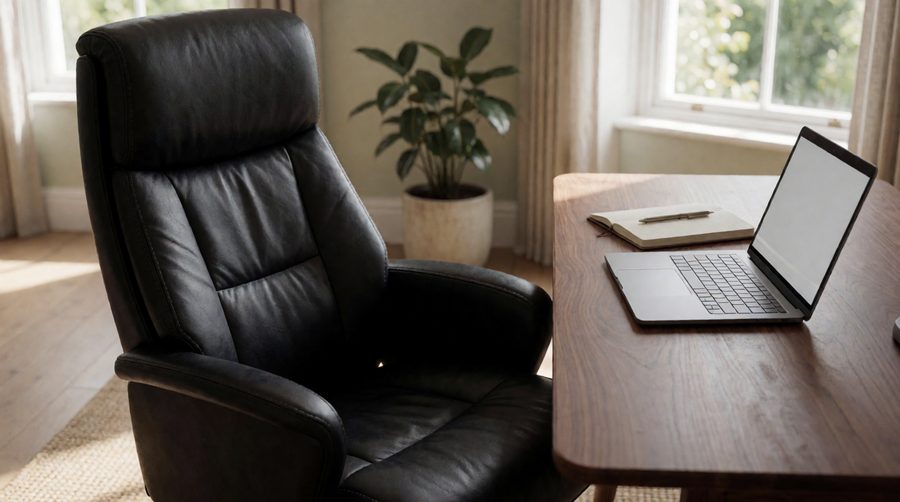
An executive chair is the large, tall chair you would expect in a manager's office: a swivel office chair with a tall cushioned backrest, often a headrest, wide armrests and a heavy five-star base. Office suppliers also call them manager chairs. On their own they are about comfort and presence. An ergonomic executive office chair adds the parts that let you fit the chair to your body and your posture - adjustable seat height, a lumbar support in the right place, a tilt you can lock, and armrests that sit at desk height. Think of it as an ergonomic office chair dressed for the boardroom.
The difference matters if you sit for long hours. A big plush executive with no lumbar adjustment can feel lovely for twenty minutes and then let you slump. The best chairs in this range keep the tall back and the generous seat, protect your posture, but let you set them up properly.
Most shops split office seating into task (or operator) office chair ranges, ergonomic or posture chairs, and executive chairs. In practice the lines blur, and the chairs on this page sit across all three:
If back support is your priority, start with our office chairs with adjustable lumbar support. If you mainly want somewhere to rest your head and neck while you read or take calls, look at office chairs with a headrest.
Your lower back curves inwards, and a good lumbar support fills that gap so you don't slouch and your posture holds through the afternoon. Fixed padding suits some people and not others. Look for a pad that moves up and down, a depth dial, or a "dynamic" support that follows your back as you lean. On an office chair this is the feature to check first. The Newtral NT002 uses an auto-following support with a resistance dial, the FLEXISPOT ErgoX has a 5D adaptive one, and the Hbada E3 Ultra a 3-zone support with 8-way adjustment.

Set the height so your feet are flat on the floor and your forearms are level with the desk. Seat depth is the adjustment many executives skip: you want two or three fingers' gap between the front edge and the back of your knees. Deep seats (the Efomao chairs are 60cm) suit tall users and people who like to sit cross-legged, but shorter people may not reach the backrest. A sliding seat, like the 6cm range on the ErgoX, solves that.
Leaning back now and then takes load off your spine and changes your posture. Check how far each back goes and whether it locks: most here lock at three angles, from 90-120 degrees on the YERAIRR up to 135 degrees on the EXCEBET, Efomao and FLEXISPOT models. A tilt tension knob lets you match the rocking resistance to your weight.
A headrest earns its place when you lean back. Adjustable ones (2D, 3D or 4D) can be set to the base of your skull. Armrests should come up to elbow height so your shoulders stay relaxed; 4D armrests also slide and swivel, and flip-up armrests let you tuck the seat under the desk.
Weight limits range from about 130kg on the ErgoX to 200kg on the YERAIRR and Efomao chairs. Go for a limit well above your weight - it usually means a stronger base and gas lift - and check the seat width if you're broad in the hips. A black office chair with a 57-60cm seat suits most bigger users. Our big and tall chairs range lists more heavy duty options.
Cover is the biggest style choice for any desk chair, and it changes how warm and how hard-wearing it is.
Many buyers want a black desk chair that suits any room - our black office chairs cover all three materials.
Figures from each listing on our site. Weight limits are the maker's stated maximum; tilt is the furthest the back goes.
| Chair | Cover | Max weight | Tilt | Lumbar | Headrest | Footrest |
|---|---|---|---|---|---|---|
| YERAIRR YR-7032 | PU leather | 200kg | 90-120° | Built in | Adjustable | No |
| Efomao 3008UK | PU | 200kg | 135°, 3 positions | Cushioned back | Tall back | Retractable |
| Efomao 3084UK | Fabric | 200kg | 3 positions | Cushioned back | Tall back | Retractable |
| Bestglory Big and Tall | PU, memory foam | 181kg | 3 positions | Cushion | High back | Retractable |
| EXCEBET 3043 | Mesh back, sprung seat | 180kg | 95/115/135° | Back support | No | No |
| Newtral NT002 | Mesh | 136kg | 96/116/126° | Dynamic, dial | 2D | Foldable |
| FLEXISPOT ErgoX | Mesh | 130kg | 135° | 5D adaptive | 3D | No |
| Hbada E3 Ultra | Open-weave back | Not stated | See listing | 3-zone, 8-way | 4D | No |
In short: the cushioned PU chairs win on comfort and weight limit, while the open-back chairs give you far more adjustment. If you want both, the Newtral is the closest to a true executive office chair with full ergonomics. On a tighter budget, see our affordable ergonomic office chairs or computer chairs under £500.
Several chairs here, including the Efomao 3008UK, the Efomao 3084UK and the Bestglory, have a footrest that slides out from under the seat. Combined with a 135 degree tilt it turns the chair into a place to read or rest between calls. Treat it as a bonus rather than a reason to buy: you still want it to support good posture sitting upright, which is where you'll spend most of the day.
Listings mention a lot of test marks. These are the ones worth knowing:
A warranty tells you how confident the maker is: the Newtral NT002 and Hbada E3 Ultra both come with 3 years, and Hbada adds 5 years on the base, gas lift and castors.
Even the best desk chair only works when it's set up for you. The Health and Safety Executive's guidance on display screen equipment and its DSE leaflet (INDG36) cover the basics: a relaxed posture, feet flat, thighs roughly level, lower back supported, armrests not forcing your shoulders up, screen at arm's length with the top at about eye height. Employers in Great Britain have to assess desk workstations, including the chair, for staff who use screens daily.
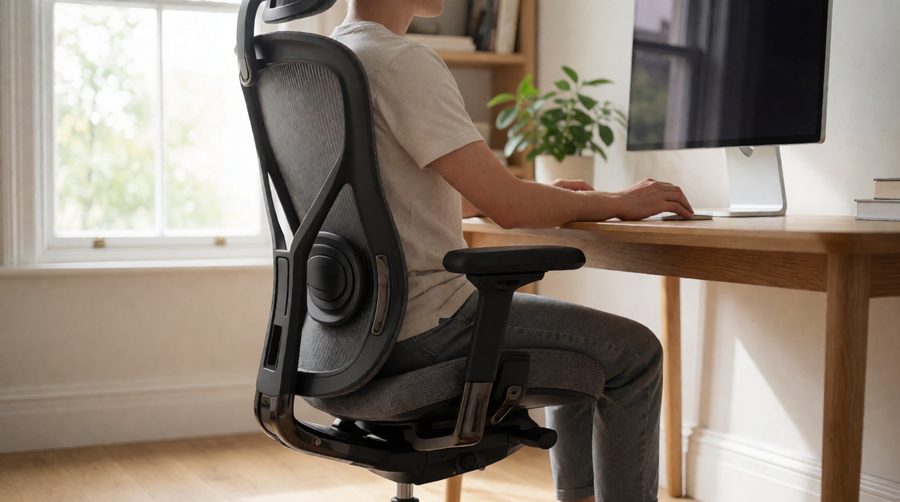
Move, too - swivel round to reach things rather than twisting. HSE advises breaking up long spells at the screen, and the NHS says staying active is one of the best ways to ease and prevent back pain. If you also use a sit-stand desk, an adjustable standing desk chair gives you a perch for the in-between heights.
They can be, if the chair has lumbar support that sits in the curve of your lower back and you can set the height and tilt. A tall back alone doesn't make a chair ergonomic. Look for adjustable or dynamic lumbar support and a seat depth that fits your legs.
An executive chair is defined by its style: high back, generous padding, often leather. An ergonomic office chair is defined by its adjustments: lumbar, seat depth, armrests, headrest and tilt. An ergonomic executive office chair combines both.
Choose a chair rated comfortably above your weight. A standard office chair is often rated around 120-136kg; heavy duty executives in this range go to 180-200kg and usually have wider seats and stronger bases.
An open-weave back stays cooler and flexes with you, so it's often more comfortable for full working days. PU feels softer and looks smarter but can get warm. Fabric sits in between.
Expect several years of daily use from a well built office chair. A long warranty, a metal base, a certified gas lift and a stated weight limit well above yours are good signs it will last.
